
Bring the Broken Lamp to a Repair Cafe Before You Buy Another
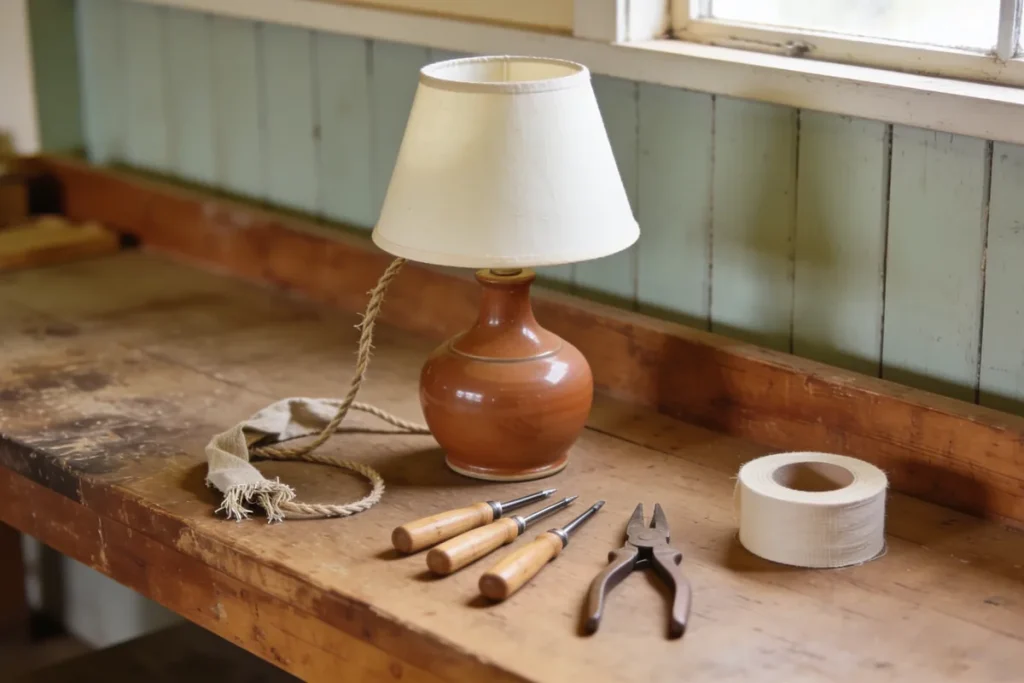
You have the lamp on the bench. The cord is frayed. The switch is loose, and the shade has seen better years. You could buy another one tomorrow. Or you could take this one to a repair cafe first.
A repair cafe is a volunteer session where people with repair skills help you fix small household items. The Repair Café International Foundation puts it this way: “Repair Cafés are free meeting places and they’re all about repairing things (together)”. Think volunteers, tools on hand and a chance to chat while you wait.
This post is a short checklist for your first visit. It covers what to bring, what might not get fixed and when a paid repairer is the better call. The short version is this. Take small household items to a repair cafe before you replace them. Sessions are usually free. Just expect limits on electrical work, and ask before you bring a lamp or a toaster.
Find a repair cafe near you
Most repair cafes keep a regular day and venue, according to Sustainability Victoria. That makes them easy to plan around.
Two Victorian examples show the pattern. They’re examples, not a directory. The Edendale Repair Cafe in Eltham runs on the third Saturday of the month from February to November. Stonnington’s repair cafe has met at Malvern Library and takes bookings through a form that asks about your item.
A third, the Sunshine Repair Cafe in Brimbank, was profiled in a Sustainability Victoria case study published in September 2024, which said it had been running since March 2023 on the fourth Sunday of the month between February and November.
None of these is likely to be your nearest. Yours may run on another day, in another venue, on another schedule. Use them as a pattern for what to look for.
Some cafes run as a program of a neighbourhood house, Sustainability Victoria says, and others are run by a community group in partnership with one. Some take online bookings two to three weeks ahead. They also welcome walk-ins.
So the first step is simple. Search for your suburb or council with the words “repair cafe”. Check the day, the venue and whether you need to book. Local community organisations are a good place to ask too, especially neighbourhood houses.
What to bring to a repair cafe
Here’s what to have in hand when you go.
- The item itself, with the bits that belong to it.
- Any special part the repair needs. Edendale says “if your repair needs something special you’ll need to bring it along”.
- Just one item. Edendale’s rule is “One item per person unless we have extra time”.
- A note of what’s wrong. Stonnington’s booking form asks about your item, and a line about the fault helps.
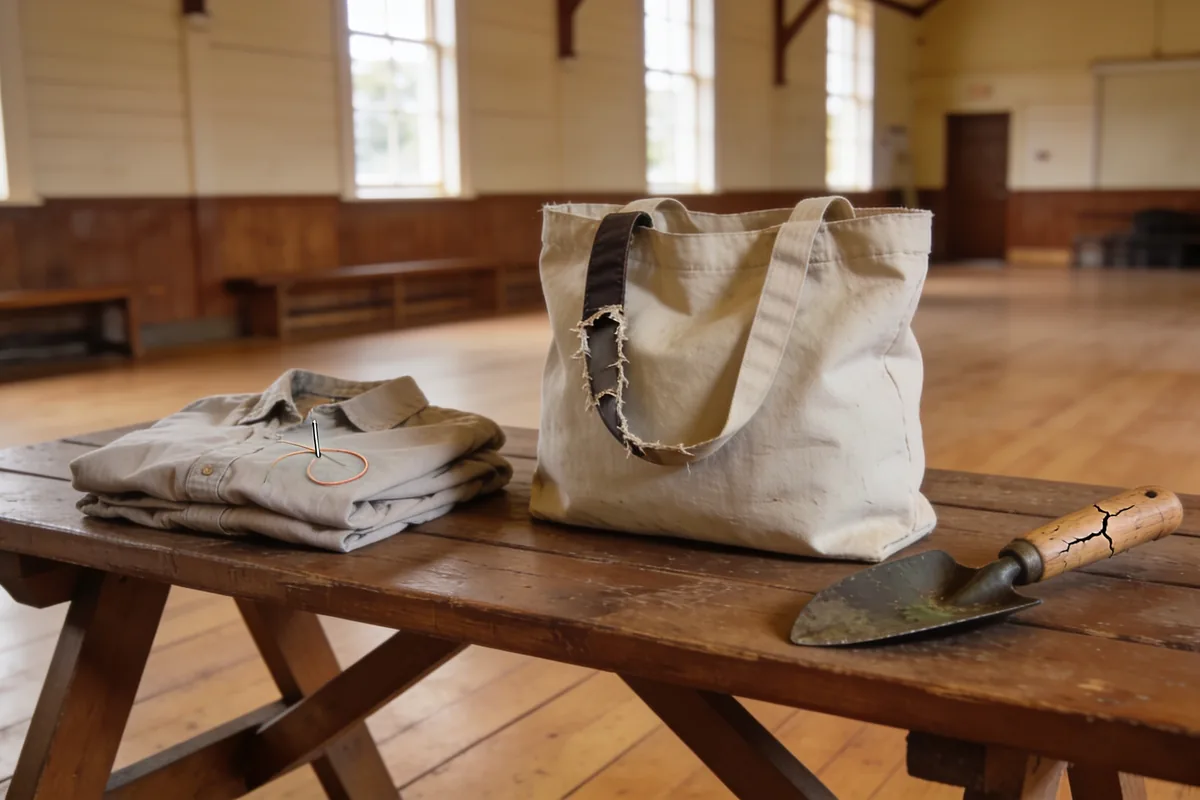
Edendale’s session runs from 10am to 12pm, which is a short window, so it pays to arrive with your item ready. Think of it as a list you can tick off at the door. Item, part, one thing at a time, and a note of what’s wrong. If you have all four, you’re ready.
Cafes welcome more than lamps. Stonnington lists general household items, clothing and accessories, small appliances, knick knacks and small furniture, with bags and costume jewellery named as well. Edendale lists clothing for simple alterations, garden equipment, and wooden items or small furniture. Clothing counts at both councils, so a loose hem is a fair thing to bring.
Not sure your item qualifies? Ask the cafe before you go.
What may not get fixed
Repair cafes are keen to help. They also have limits.
Stonnington’s page is clear about them. The items it can’t repair include “Some items that require parts, specialist skills or complex electrical repairs”. Its volunteers “will do our best to offer advice”, but “this is not a professional service”. That’s a fair deal. You get free help and honest advice. In return, you accept that the answer might be no.
Here is what those two councils list, side by side. It isn’t universal, so treat it as a guide to the pattern.
What two Victorian council repair cafes list (Stonnington City Council; Nillumbik Shire Council, Edendale Repair Cafe), with Sustainability Victoria’s note on electrical items in the middle column. It is a guide to the pattern, not a rule for every cafe.
| Bring | Ask first | Unlikely on the day |
|---|---|---|
| Clothing for simple alterations; bags, costume jewellery, accessories | Small appliances and other electrical items (test and tag needed) | Items needing parts the cafe does not have |
| Small furniture and wooden items | Anything needing a special part (bring it) | Items needing specialist skills |
| Garden equipment; knick knacks | More than one item (time permitting) | Complex electrical repairs |
Read the table by column. Items in the first column are the safest bets. The second column is worth a message to the cafe first. The third is where a paid repairer may be the better answer.
Electrical items need a little extra care. It helps to know why. Sustainability Victoria says most cafes have insurance to cover their work, but a cafe may or may not be insured to fix small electrical goods. One that isn’t can’t take on your toaster, however keen the volunteers are.
Sustainability Victoria also says a cafe may only be able to fix electricals if someone has been trained to test and tag the repaired appliance for electrical safety. Visitors are often asked to sign a disclaimer too. That’s a document saying you accept the risk.
Lamps are the good news. The Sunshine Repair Cafe in Brimbank has a Portable Appliance Tester and tagging equipment “for electrical items, like lamps”, and it trains its repairers to use it, according to a Sustainability Victoria case study. So a lamp can be fixed at a cafe that’s set up for it.
So ask before you bring an electrical item. A quick message to the cafe will tell you whether anyone there can test and tag, so check before you set out.
Is a repair cafe free?
Mostly, yes. The foundation describes repair cafes as free meeting places. The Edendale page lists the cost as free, with donations accepted. At the Sunshine Repair Cafe, volunteers “make repairs free of charge”, the case study says. Stonnington’s bookings are free too. The Edendale page puts it plainly: get your household items repaired “for free by our team of volunteers”.
Few cafes charge fees. Sustainability Victoria says those that do charge “to encourage attendance at events and to not be in direct competition with repairers”.
So you can expect to pay nothing for the repair. If you’d like to give something back, bring a little change for a donation. Any special part is yours to bring, so factor that in.
Free here means the volunteers’ time. It doesn’t mean every repair will work.
Repair cafe or paid repairer?
A repair cafe isn’t a replacement for a repair shop. The foundation says so itself. Its position is “Not competing with professional repair specialists”, and visitors are “frequently advised to go to the few professionals still around”.
The foundation also says visitors tell it they would normally throw a broken item away because they find a professional repair too expensive. Cost is a common reason things go in the bin, and a cafe takes the cost out of the first attempt. That’s the gap cafes fill. If the choice is between a cafe and the bin, the cafe wins.
A paid repairer is the better call when:
- the repair needs parts the cafe doesn’t have
- the fault needs specialist skills
- the electrical work is complex
Those three come straight from Stonnington’s list of what it can’t repair. If you do need a paid repairer, appliance repairers in the directory are a good place to start.
A quick way to decide is to ask three questions. Is the item small? Could a volunteer look at it in one session? Does it need a part you can bring? If the answer to all three is yes, try the cafe. If any answer is no, call a repairer.
None of this is a reason to skip the cafe. Think of it as a first stop, not a last resort. Even when a cafe can’t fix something, you may leave knowing what the fault is and who to see next.
If the item is cheap and the cafe is close, trying costs little. If it’s something you rely on every day, ring a repairer first and ask what they’d charge.
Learn while it is fixed
A good repair cafe is a bit of a classroom. Sustainability Victoria says the repairer can talk you through the repair and get you to do parts of it while they supervise. You might leave with a skill as well as a working lamp. Watch what the volunteer does. Ask what they’re checking and why. They can talk you through it, so make use of that.
Some cafes record the weight of the items they save. The Sunshine Repair Cafe’s case study says it diverted 6.2 tonnes of household waste from landfill. The foundation says there are over 2,500 Repair Cafés worldwide, and the first opened in Amsterdam on 18 October 2009.
That’s the bigger saving. The lamp stays out of landfill, and you pick up the habit of asking whether a broken thing can be mended. Stonnington also welcomes volunteers, so if you pick up the knack you could go back and help.
Fix First, Then Decide
Here’s the checklist to take with you.
- Find a session near you and check whether you need to book.
- Ask about electricals before you bring one.
- Bring the part if the repair needs something special.
If the item can’t be fixed, ask the cafe where to dispose of it properly. Sustainability Victoria says cafes encourage visitors to dispose of unrepairable items appropriately, so the volunteers are the right people to ask.
Take the lamp, the part and a bit of patience. The rest is a conversation with someone who likes fixing things.
Fix first. Then decide whether the lamp stays or goes.
Sources: Sustainability Victoria, Guide to running repair hubs and cafes (https://www.sustainability.vic.gov.au/circular-economy/community-circular-economy-guides/guide-to-running-repair-hubs-and-cafes); Sustainability Victoria, Fix, don’t toss: Repair cafes teach community to repair, re-use, refurbish (https://www.sustainability.vic.gov.au/news/news-articles/fix-dont-toss-repair-cafes-teach-community-to-repair-re-use-refurbish); Repair Café International Foundation, About (https://www.repaircafe.org/en/about/); Stonnington City Council, Repair cafes (https://www.stonnington.vic.gov.au/Whats-On/Repair-cafes); Nillumbik Shire Council, Edendale Repair Cafe (https://www.nillumbik.vic.gov.au/Explore/Events-and-festivals/Events-calendar/Edendale-Repair-Cafe)