
A Day in Litchfield National Park Is Planned Around Which Pools Are Open
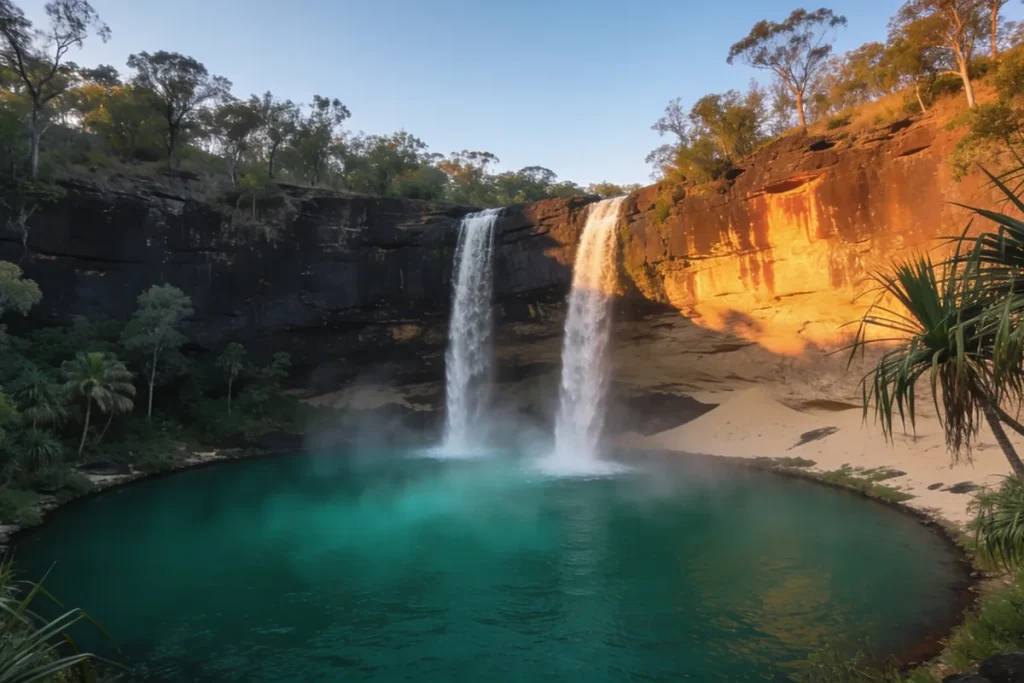
At first light the plunge pool at Florence Falls is as still as poured glass. Twin falls slide down a dark sandstone face and disappear into green water, and the monsoon forest around the rim is only beginning to separate itself from the shadow. A little mist hangs low over the surface. The car park, an hour from now, will be busy with people pulling on hats and checking their water bottles, but just now it holds a handful of vehicles, and the only sound is the falls themselves.
This is Litchfield National Park early in the dry season. The wet has gone and the paths have dried, though the air still carries a trace of the green season, and the light comes slowly over the escarpment.
It is a lovely place to stand and an easy one to plan badly. Most itineraries for the park list the same three or four stops, and most of them leave out the part that decides the day: which of those pools are open, which are for looking at and which are not for swimming at all.
Getting there and the pass
Litchfield is a day trip from Darwin, and most visitors treat it as one. The NT Government’s park page puts it about 120 km south-west of Darwin, reached from Cox Peninsula Road or through Batchelor, and gives the park as about 1,500 square kilometres. It gives no drive times between sites, so check a current map and the NT road report before leaving, and allow generous margins. The same page warns that parks may close unexpectedly because of bushfires, flooding or park maintenance, and asks visitors to check that the park is open before they go. A common view among Darwin locals online is that the road report is worth a look on the morning of any trip.
The first piece of preparation is the pass. The NT Parks Visitor Pass, on a page updated on 16 April 2026, is required of visitors to the Northern Territory and not of NT residents. It is bought online before arrival, through the parks booking system, so it is a job for the night before, not for the car park. On that page, a one-day adult pass was listed at $10, a child pass at $5 and a family pass at $25. Treat those as the figures listed in April 2026 and confirm them when booking. Kakadu and Uluru-Kata Tjuta use separate passes issued by Parks Australia, so the Litchfield pass does not cover them.
That much is administrative. The part worth planning is the shape of the day. For anything the park pages do not cover, such as a hire car or a guided tour, the Northern Territory businesses in the directory are a reasonable place to start. The walks below can be done either way, in an order built from the official distances and times. It is a planning method, not a timetable, because nobody can promise how long a morning will take.
Florence Falls and the walk to Buley Rockhole
Florence is the place to begin, partly because it is quiet early and partly because it anchors the walk that follows. The track down from the car park is the Shady Creek and Florence Falls walk, listed on the NT Government’s short walks page as 1 km one way, about 30 minutes, with 160 stairs. The stairs are the honest part of that description. Going down is pleasant, and coming back up in rising heat is the cost of the view. A walker who begins early pays it more cheaply.
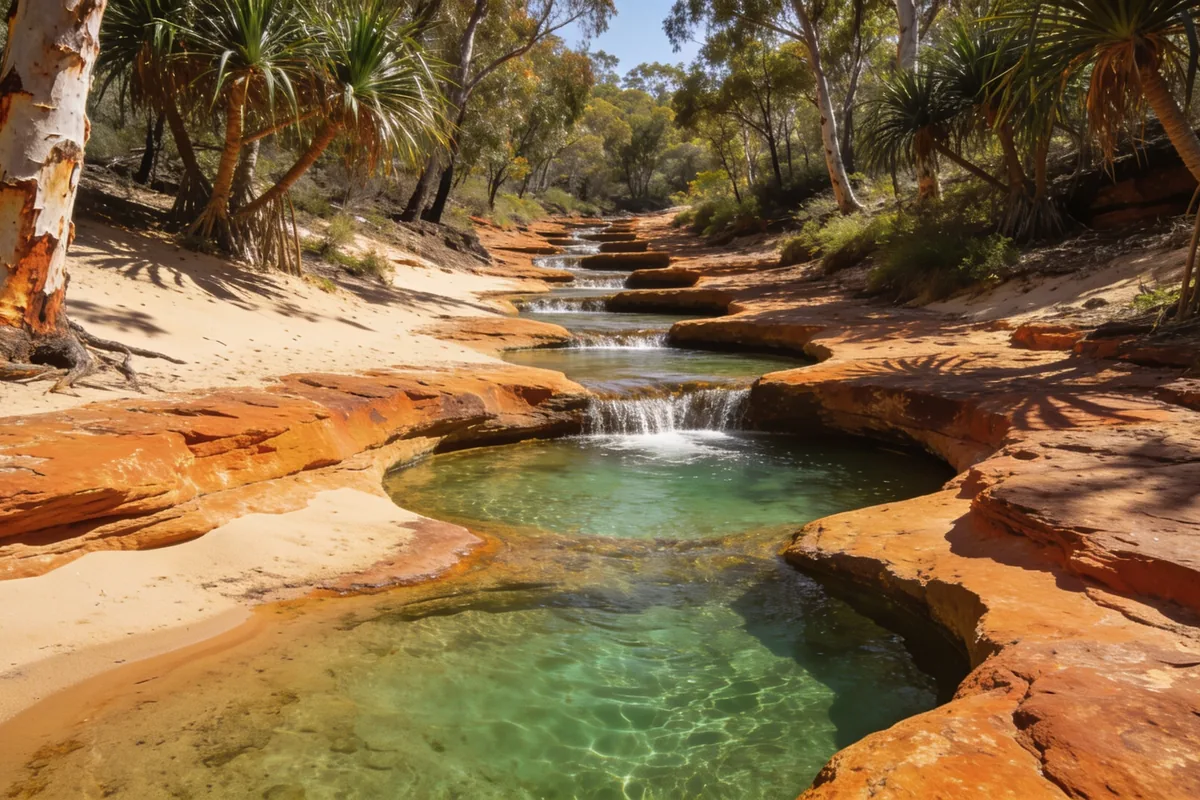
From Florence, the Florence Creek walk leads on to Buley Rockhole. The walks page gives it as 3.2 km, about 1.5 hours, and the page says to park at Florence, because parking is limited at Buley. That detail alone saves some people a frustrating circuit of a full car park. It also means the order of the morning is almost set: leave the vehicle at Florence, swim there if the site is open, and walk on to Buley on foot.
Buley Rockhole sits among the designated swimming sites, and the water there steps down through rock, with the creek spilling from one pool into the next. On a still morning it has a different character from Florence. Florence is a single deep green bowl under a pair of falls. Buley is a creek that has been shaped into a staircase, loud where it drops and quiet in the pools between. A visitor who arrives early may have a pool almost to themselves for a short while.
The walk itself is graded 2 on the page, the easier of the two grades mentioned here, while the Florence stairs are graded 3. That is worth knowing before the legs get tired, since the harder section comes first and the easier one follows it. The legs are better spent on the stairs early than late.
Allow time for all of it. The page’s 1.5 hours is the walking, and time in the water comes on top, so this is the stretch of the day that runs long. Water, a hat and sensible shoes are the whole of the kit, and the later stops will keep.
Tolmer Falls, from the lookout only
Tolmer is a different kind of stop, because there is no swimming at all.
The walks page lists the Tolmer Falls walk as 1.6 km return, about 45 minutes, through sandstone country, and says plainly that swimming is not allowed. It is a lookout, not a pool. The walk is short, the view takes in the falls and the rock around them, and the hour spent here costs the day very little. For a visitor whose list is already long, this is the stop that can be taken at a gentler pace.
After a morning in the water, an hour of looking changes the rhythm of the day. It also reminds a visitor that Litchfield is sandstone country with water in it, and that some of that water is meant to be admired from a distance. The park page lists its iconic magnetic termite mounds among the sights, and they make a short change of scene between the falls.
Wangi Falls, and the question of whether it is open
Wangi is last, and is the one most visitors have come for. The NT Government’s Wangi Falls page, updated on 23 March 2026, says the falls flow all year round. The swimming hole is a short accessible walk from the car park, with a handrail leading into the water and a few steps down. It also warns that the water becomes deep quickly, and that it is not safe to swim at the top of the falls. For a walk rather than a swim, the walks page lists a 1.6 km return walk, about an hour, steep in sections, with swimming not allowed above the falls.
Now the question readers ask most often: can a visitor swim at Wangi? There is a conflict in the sources, and it needs naming. Wangi is on the designated list of places where swimming is allowed, and the falls flow all year. Yet the site page carries its own open-or-closed status, and a common report from Darwin locals online is that Wangi closes in the wet season while many of the other holes stay open.
The ruling is simple. The status on the site page on the morning of the visit decides, not the season and not a list in a blog post. A designated site can still be closed on a given day, and the open-or-closed table on the Wangi page is the thing to check. This post does not state the current status of any site, because that changes from day to day, and only the page can say what is true this morning.
Reading the status before leaving the car park is a small habit that spares a lot of disappointment. A visitor who walks to a closed site has spent the effort and gained nothing, while one who checked first can simply turn to the next stop.
If the status shows closed, the day does not collapse. Florence, Buley and Tolmer sit earlier in the order for exactly that reason, and a walker who has spent the morning at them has had a full day already. If it shows open, Wangi is a fine place to finish: a deep pool under the falls and the day’s last light on the water.
The swimming rules, in one place
Most itineraries skip these, so here they are together. All are from the NT Government’s swimming page, last updated on 23 February 2022, and the short walks page.
You may only swim at the designated sites:
- Buley Rockhole
- Cascades
- Florence Falls
- Surprise Creek Falls, along the Reynolds River Track, 4WD access
- Tjaynera Falls (Sandy Creek Falls), along the Reynolds River Track, 4WD access
- Walker Creek
- Wangi Falls
Park rangers monitor the safety of swimming holes, and swimmers must stay in the designated areas. The page says that conditions change rapidly with flash flooding and electrical storms, and gives the instruction in plain words: if it does not feel safe, do not swim. Children must be supervised. No glass is allowed within 10 m of waterways. The Reynolds River and roadside creeks are neither safe nor monitored, and they are not on the list.
The short walks page adds three more cautions. Swimming is not allowed above Wangi Falls or at Tolmer. The plunge pool at Greenant Creek, and the area downstream of the falls, is a sacred site, and visitors should not swim there. The Lower Cascades walk is closed in the wet season, because of flooding and an increased risk of crocodiles. This post says no more about crocodiles than the park’s own page does.
Everything outside the designated list is simply not a swimming hole for the purposes of the visit.
One day or two
Darwin threads tend to split on this. Locals often say a day is plenty, and visitors often say two. The usual advice on both sides is to start early, because it gets hot before midday, and not to try to do too much. A good day is three water holes, with time to sit between them.
The other side has a fair point, and it should be said. Two days suits a visitor who wants the 4WD falls, or to camp. Surprise Creek Falls and Tjaynera Falls both lie along the Reynolds River Track and need 4WD access, which a day on the main sites will not reach. For that visitor, one day undersells the park, and a second day, or a night out there, makes sense. Anyone weighing that up could look at the places to stay listed in the directory, and decide how much of the park they want.
Anyone short of two days has other options from Darwin. Another day trip is Dundee Beach, which suits a visitor who would sooner have a coastline than a creek. They make different days.
Leaving Before the Light Goes
By late afternoon the escarpment turns gold, and the road north fills with cars heading back to Darwin with sandy feet and damp towels on the back seat. The falls look the same as they did at dawn, but the people have changed. The ones who started early are tired in the best way. The ones who started late are still deciding where to swim.
The plan is half of a day in Litchfield, and the other half is what the site page says that morning. Order the stops by the walks, keep to the designated sites and check the status before the first step. Then let the day take as long as it takes.
At the last lookout, the falls are still running, as they have all year.
Sources: NT Government, Swimming in Litchfield National Park (https://nt.gov.au/parks/find-a-park/litchfield-national-park/swimming); NT Government, Short walks in Litchfield National Park (https://nt.gov.au/parks/find-a-park/litchfield-national-park/short-walks); NT Government, Wangi Falls (https://nt.gov.au/parks/find-a-park/litchfield-national-park/wangi-falls); NT Government, NT Parks Visitor Pass (https://nt.gov.au/parks/visitor-pass); NT Government, Litchfield National Park (https://nt.gov.au/parks/find-a-park/litchfield-national-park)